
Last updated November 24, 2026
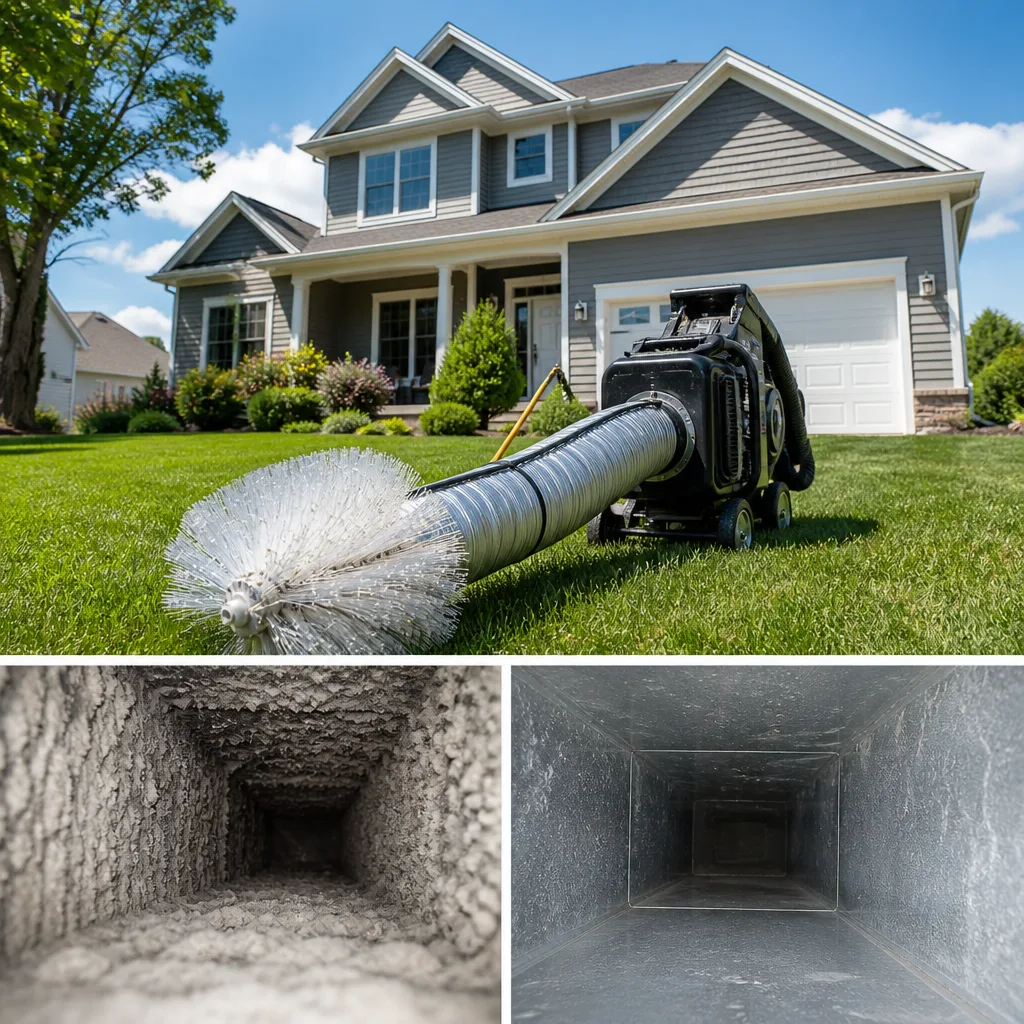 Whole-home duct cleaning
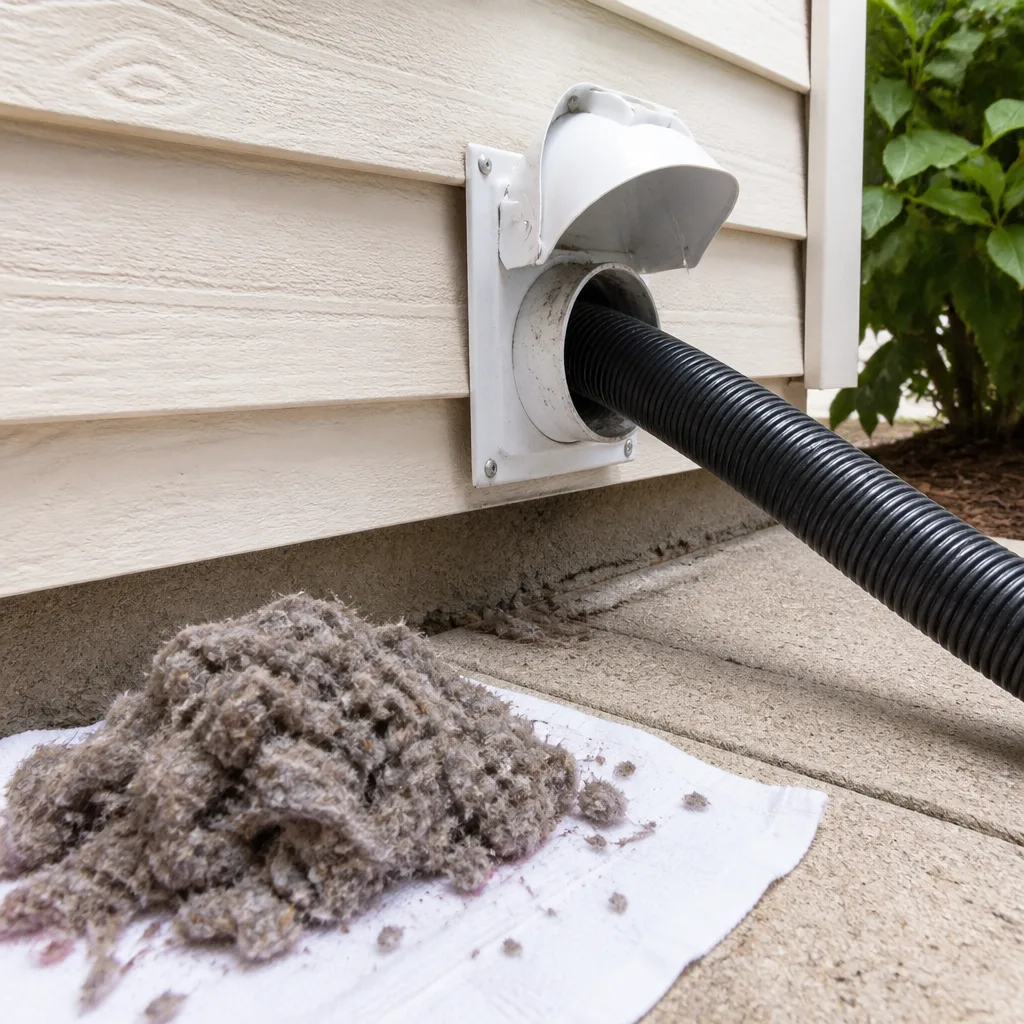 Dryer vent cleaning
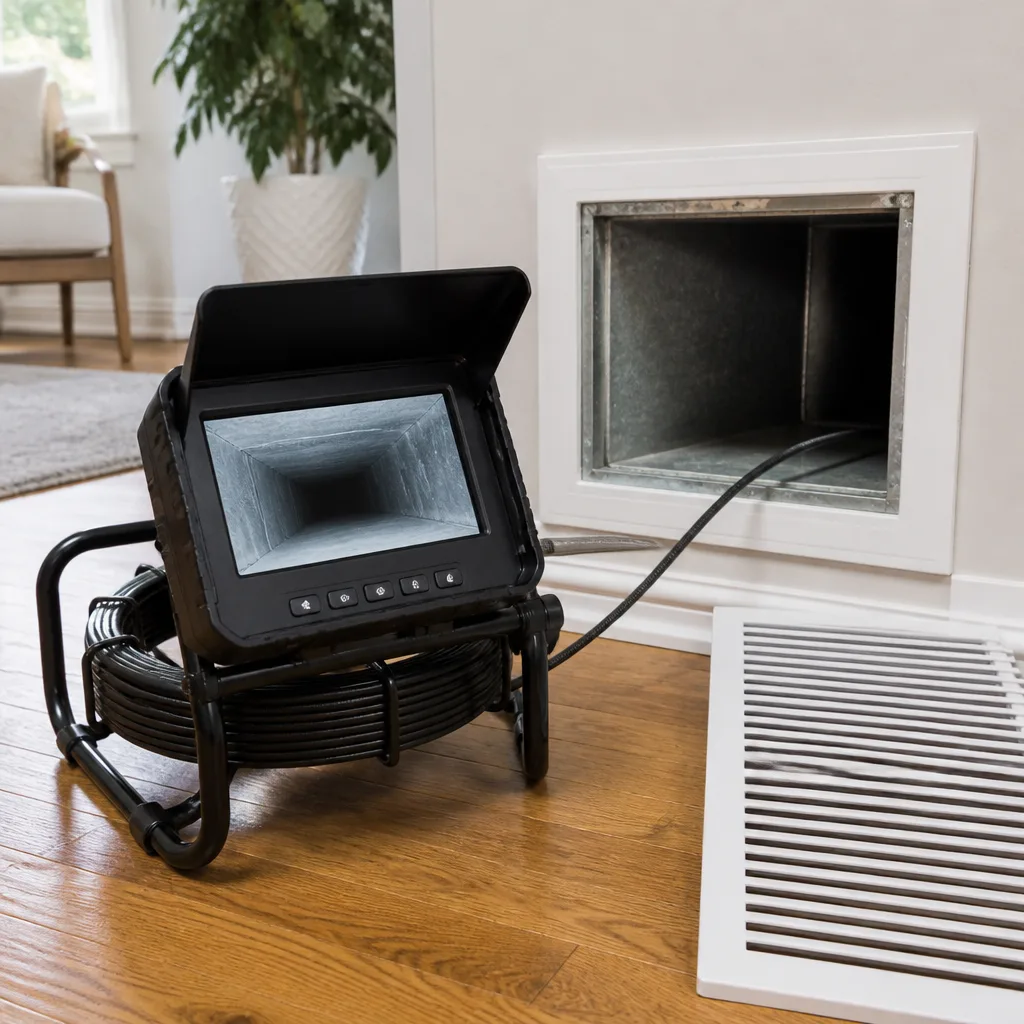 Camera inspection
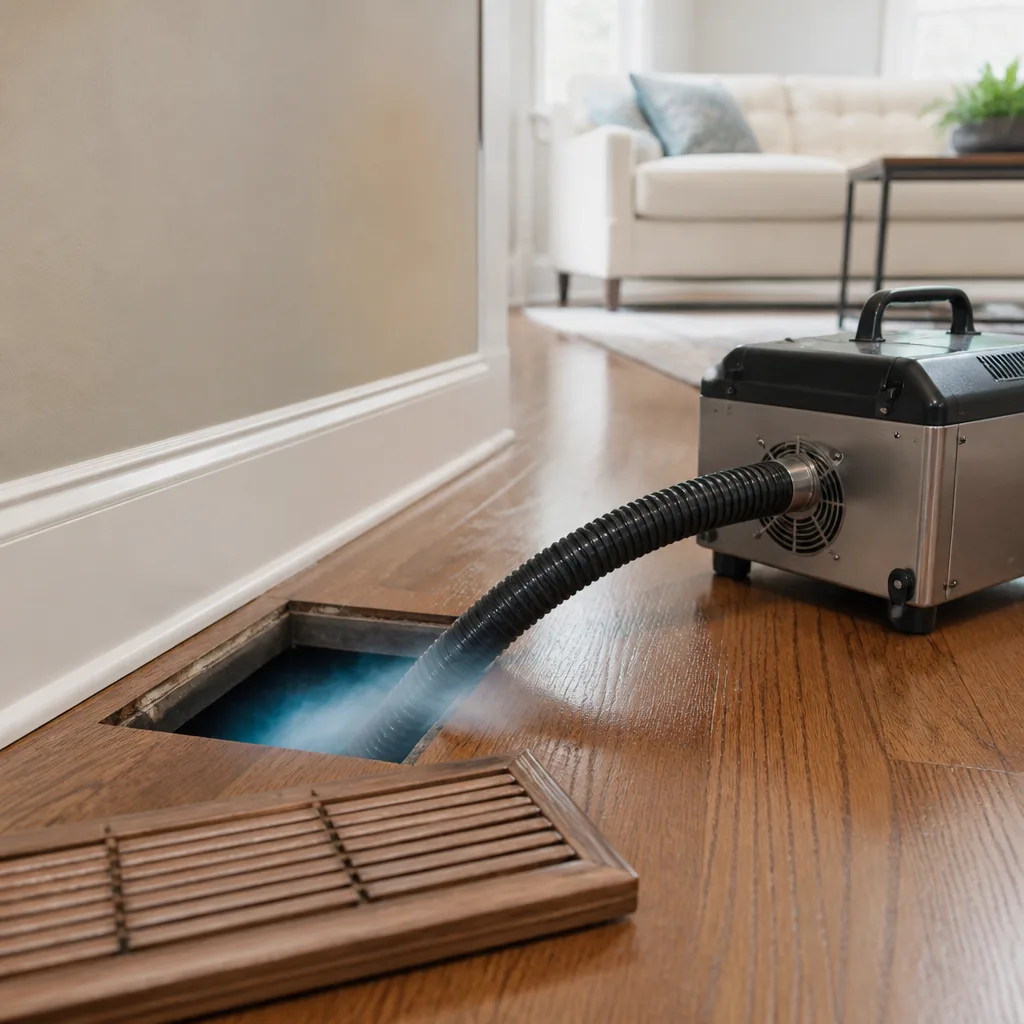 Sanitizing & deodorizing
Whole-system duct and dryer vent check with before-and-after photos - you see exactly what came out of your vents
That "$99 whole-house special" is a bait ad - the real number appears once they are in your hallway, or the "clean" is a shop-vac at the register. We photograph the inside of your ducts before and after instead.
Air Duct Cleaning Emergency Preparedness Guide for Hermitage Homes
Most homeowners reach for the thermostat after a fire, flood, or severe storm, and that single reflex is what turns a contained mess into a system-wide contamination problem. The HVAC system is a loop. Whatever enters the return side gets pushed out through every supply register in the house, and in Hermitage that loop moves a lot of air through a lot of rooms. We’ve walked into homes where the fire was out but the contamination kept circulating for days. This guide covers the three emergency types homes here actually face – fire, flood, and storm infiltration – with a specific response sequence for each, what your insurer will want to see, and two inexpensive upgrades that cut the damage next time.
Quick Answer
After a fire, flood, or storm infiltration event in Hermitage, shut the HVAC system off at the thermostat and the breaker before anything else, document the visible damage with photos, and get a professional assessment before the system runs again. Smoke soot, flood sediment, and wind-driven debris all travel the same path – return grille, filter slot, blower, coil, then every supply duct – so the cleaning order has to run backward from the source to avoid recontaminating cleaned sections. Timing and sequence matter far more than how hard anyone scrubs.
Styles & brands we work with
- Whole-home duct cleaning
- Dryer vent cleaning
- Camera inspection
- Sanitizing & deodorizing
Table of Contents
- Post-Fire Duct Contamination: The Response Sequence
- Post-Flood Ductwork: Slab Homes vs. Crawlspace Homes
- Storm Infiltration: What to Inspect in the First 24 Hours
- Insurance Documentation: What a Claim Actually Needs
- Pre-Event Preparedness: Two Modifications That Cut the Damage
- What the Professional Assessment Looks Like
- Why the Dryer Vent Belongs in an Emergency Plan
Post-Fire Duct Contamination: The Response Sequence
Smoke residue is not a single substance. It’s a mix of fine ash, char particulates, vaporized synthetic compounds, and acidic soot that clings to metal and flex duct surfaces. The whole mixture travels into the return system within minutes of the fire starting, and it settles onto the blower wheel, the evaporator coil, and the interior walls of every duct run. If the system runs even briefly afterward, that settled layer gets redistributed as a fine coating through the entire house.
The sequence below is what actually works. Out of order, you clean the ducts and then push a coil’s worth of soot right back into them.
- Shut the system down immediately. Turn the thermostat to off and switch the air handler breaker off at the panel. If there’s any doubt about the wiring or the panel itself, leave it to a licensed electrician.
- Photograph everything before it moves. Wide shots of each room, close-ups of registers and grilles, the return grille, the filter, and the air handler. Photograph the thermostat setting and the panel breaker position. Insurers accept photo timestamps; they can’t reconstruct a scene you cleaned up first.
- Get a soot and contamination assessment. A professional looks at visible residue level, filter condition, coil condition, and whether the residue is dry ash or the oily, acidic variety left by burning synthetics. The two clean very differently.
- Hire the cleaning in this order: air handler and coil first, then duct runs, then registers and grilles. Cleaning the ducts before the coil pushes residue off the coil and back into freshly cleaned ductwork. Working outward from the source is the only sequence that holds.
- Replace the filter last, after cleaning, and plan on replacing it again after the first few hours of runtime.
For homes with heavy contamination, extraction goes well beyond a shop vac. Equipment matters here. Rotobrush contact cleaning physically agitates and extracts residue from duct walls rather than just drawing air past it, and Abatement Technologies filtration units capture fine particulate at the source so it doesn’t settle back into the room. In our experience, homes where the system was shut off early clean up with routine extraction; homes where it ran for days often need more aggressive treatment and coil cleaning before anything else.
Post-Flood Ductwork: Slab Homes vs. Crawlspace Homes
Flooding in this part of Middle Tennessee doesn’t just pool on the surface. It tracks along the lowest path available, and in homes here that path is often the crawlspace or the slab-level mechanical closet. What happens to your ductwork depends almost entirely on which one you have.
Slab homes: In a slab home, the supply ducts run either overhead in the attic or, in older designs, under the slab itself. Ducts under the slab are the problem case. Water intrusion under a slab doesn’t drain. It sits against the duct envelope, and any breach – even a pinhole from a nail or a hairline crack at a joint – becomes a slow pathway for groundwater, silt, and mold spores to work into the duct interior. Once groundwater has been inside a duct under a slab, cleaning is rarely enough because you can’t see or dry the full length of the run reliably.
Crawlspace homes: Ducts in a crawlspace are accessible, which is a big advantage. The contamination risk here is less about direct flooding into the duct and more about the environment the ducts sit in afterward: sustained high humidity, wetted insulation, and standing water on the vapor barrier. Flex duct in a humid crawlspace absorbs moisture through its outer jacket, and the interior lining becomes a mold-friendly surface fast.
A quick decision guide:
- Duct cleaned, not flooded: Visible surface contamination only, dry interior, no groundwater contact. Cleaning and sanitizing typically restores it.
- Duct flooded but not collapsed: Groundwater entered the duct. Cleaning may work if the duct is metallic, accessible, and can be fully dried before sanitizing. Flex duct in this condition is usually replaced, not cleaned.
- Duct saturated, mold-affected, or structurally compromised: Replacement is the honest answer. Cleaning a duct that has been waterlogged and colonized by mold leaves you with a clean-looking surface that regrows in weeks.
If you’ve had water in the crawlspace, don’t restart the system until the mechanical space is dry and the ducts have been inspected. If you’re outside our normal service windows and need an assessment, call (855) 726-7834. We answer 24/7, and a call outside dispatch hours gets booked into the next opening, Sunday through Friday, 7am to 7pm.
Storm Infiltration: What to Inspect in the First 24 Hours
A severe storm doesn’t need to remove shingles to contaminate ductwork. Wind-driven rain and debris enter through roof vents, soffit vents, gable vents, and any gap around a chimney or plumbing penetration. Once inside the attic, the air handler and any ducts running there act like a straw. Water finds the return system, and the return system carries it downstream.
Tornado-adjacent pressure events add another wrinkle: fast pressure changes can pop duct joints apart and pull flex duct off its collars, especially in an attic where the runs are long and unsupported. That’s a hidden leak you can’t see from inside the living space until you feel a room that won’t cool.
Within 24 hours of a major windstorm, do these checks:
- Look at the returns. Remove the return grille and look for debris, water staining, or a dislodged filter. Water in a return filter is a warning sign for the whole system.
- Inspect the attic if it’s safely reachable. Look for wet insulation around the air handler and for duct runs pulled off their collars. Don’t walk a wet roof deck or push through a compromised ceiling; that’s a call-out, not a DIY.
- Sniff the supply registers. A musty or wet-building smell is the ductwork telling you water got in.
- Check the filter slot. If the filter is wet or damp, shut the system off until someone can look at it.
- Note any room that suddenly won’t cool. A single warm room after a storm often means a separated duct joint upstream.
Filter protocol for the first 72 hours of runtime after a storm: run a fresh filter at start, inspect it at 24 hours, replace it at 72 hours whether it looks loaded or not, then again at roughly two weeks. Debris in the air after a storm loads a filter much faster than normal, and a loaded filter strains the blower. If the ducts have taken on water, skip the runtime altogether and get an assessment first.
Insurance Documentation: What a Claim Actually Needs
Insurance claims on ductwork fail for one reason more than any other: the homeowner cleaned up before documenting. Adjusters work from evidence, and evidence for a duct system has to show both the damage and the source. Under standard Tennessee homeowner policies, duct cleaning and replacement are covered when the underlying cause (fire, water damage, storm) is a covered peril. Wear and tear, gradual mold from long-term humidity, and deferred maintenance are typically excluded, which is why the documentation has to tie the contamination to the event.
What to gather before you call the adjuster:
- Dated photographs before any cleanup: every register and grille, the return, the filter as found, the air handler, the coil if visible, and the attic or crawlspace conditions.
- A written scope of work from a contractor that separates cleaning from replacement and names the equipment and process – not a one-line quote that says “clean ducts.”
- Air sampling results for fire and mold claims, where the adjuster requests them. Source-capture filtration readings give you numbers rather than opinions.
- Photo evidence of source – the fire, the waterline in the crawlspace, the dislodged roof vent, the wet insulation. Match each contamination photo to a source photo.
- A contractor report with cause, extent, and recommended remedy, written in plain language, itemized by room and by system component.
We can work with your insurer and build the report they need, but the phone call to start the documentation should happen the same day as the event. Once cleanup begins without photos, the strongest part of the claim is gone.
Pre-Event Preparedness: Two Modifications That Cut the Damage
You can’t prevent a fire, a flood, or a tornado. You can decide how much of your HVAC system survives one. Two inexpensive modifications meaningfully reduce how far contamination travels, and both are worth doing before anything happens.
1. Sealed return grilles
Standard return grilles have no gasket and no seal. They’re a gap at the ceiling or wall, and in an event where smoke or fine debris is in the air, that gap is a free entry point. Sealing the return with a proper gasketed frame and a removable cover limits how much contamination the return can pull in during an event and during any nearby renovation or construction dust. This one is quiet, cheap, and it pays off in both emergencies and in everyday air quality.
2. MERV-11 pre-filters ahead of the main filter
A pre-filter in front of the primary filter catches the coarse stuff – dust, ash, debris pulled in from a storm – before it reaches the more expensive main filter and the coil. It extends filter life in normal use and buys you hours of protection when something goes wrong. MERV-11 is a practical ceiling for many residential systems; going higher can restrict airflow and hurt performance. Check your system’s filter slot depth before ordering, and don’t oversize the rating to make yourself feel safer.
While you’re thinking about preparedness, look at the dryer vent. Lint accumulation in a dryer vent is a genuine fire hazard, and the vent is an air pathway most homeowners never check. Including it in your emergency plan means having one call handled before a fire starts rather than after. Dryer vent safety is part of our standard scope for that reason.
What the Professional Assessment Looks Like
An assessment is not a sales visit disguised as an inspection. It’s a look at the full air pathway from the air handler through every register, and it produces a written picture of what happened and what it will take to fix it. We bring Rotobrush and Nikro equipment because surface-level vacuuming of a duct run does not address what’s bonded to the duct wall or what’s sitting on the blower and coil.
A typical assessment covers:
- Air handler and blower wheel condition.
- Evaporator coil condition (this is where smoke and moisture residue accumulates and where the cleaning sequence starts).
- Duct interior condition, run by run, with photos.
- Register and grille condition at each room.
- In homes with contamination concerns: air sampling and filtration with Abatement Technologies source-capture equipment.
- A written scope separating cleaning from replacement, with rooms and components itemized.
If the assessment finds leaks or separated joints, sealing them belongs in the plan. Cleaning a system and leaving it leaking means the energy loss and cross-contamination continue. If you’re considering a whole-home filtration upgrade after an event, we work with Honeywell and Aprilaire systems and can include that in the same scope. A cleaning, a repair, and an upgrade can all be sequenced into one visit to avoid calling three contractors in sequence during an already stressful week.
Why the Dryer Vent Belongs in an Emergency Plan
Most emergency plans focus on the HVAC system and ignore the other air pathway in the house. The dryer vent carries hot, moisture-laden air and lint, and a lint-clogged vent is a fire risk the homeowner can’t see. In a home with a long vent run or a flexible transition behind the dryer, lint traps and accumulates with no obvious warning.
The inspection is quick. A professional opens the dryer side, checks the run and the exterior termination, and confirms airflow. It’s a safety check more than a cleaning, and it’s the kind of thing that belongs on a winter preparedness checklist right alongside the HVAC filter replacement. Our team handles it alongside duct work as part of the same air-pathway scope. Combining the two service calls into one keeps your schedule simple and your household system covered end to end.
Common Mistakes to Avoid
- Turning the HVAC back on after a fire. Running the system after a fire distributes soot and smoke residue through every room in minutes. Shut it off at the thermostat and the breaker before anything else.
- Cleaning the ducts before the coil. Cleaning in the wrong order pushes coil residue back into freshly cleaned ducts. The sequence is air handler and coil first, then ducts, then registers.
- Restarting after flood contamination without a crawlspace dry-out. In a humid crawlspace, a damp duct and a damp mechanical space will turn a clean duct into a moldy one within weeks. Dry the space before restarting.
- Cleaning a saturated flex duct instead of replacing it. Flex duct that has taken on groundwater rarely comes back clean and dry. Replacement is the honest fix.
- Skipping photos before cleanup. Insurers can’t reconstruct a scene you’ve already cleared. Photograph everything first.
- Running an oversized MERV rating to feel safe. Too high a MERV rating can restrict airflow and strain the system. Stick to what your system supports, which is often MERV-11.
- Forgetting the dryer vent. A blocked dryer vent is a fire risk you can’t see. Include it in your preparedness inspection.
See the difference
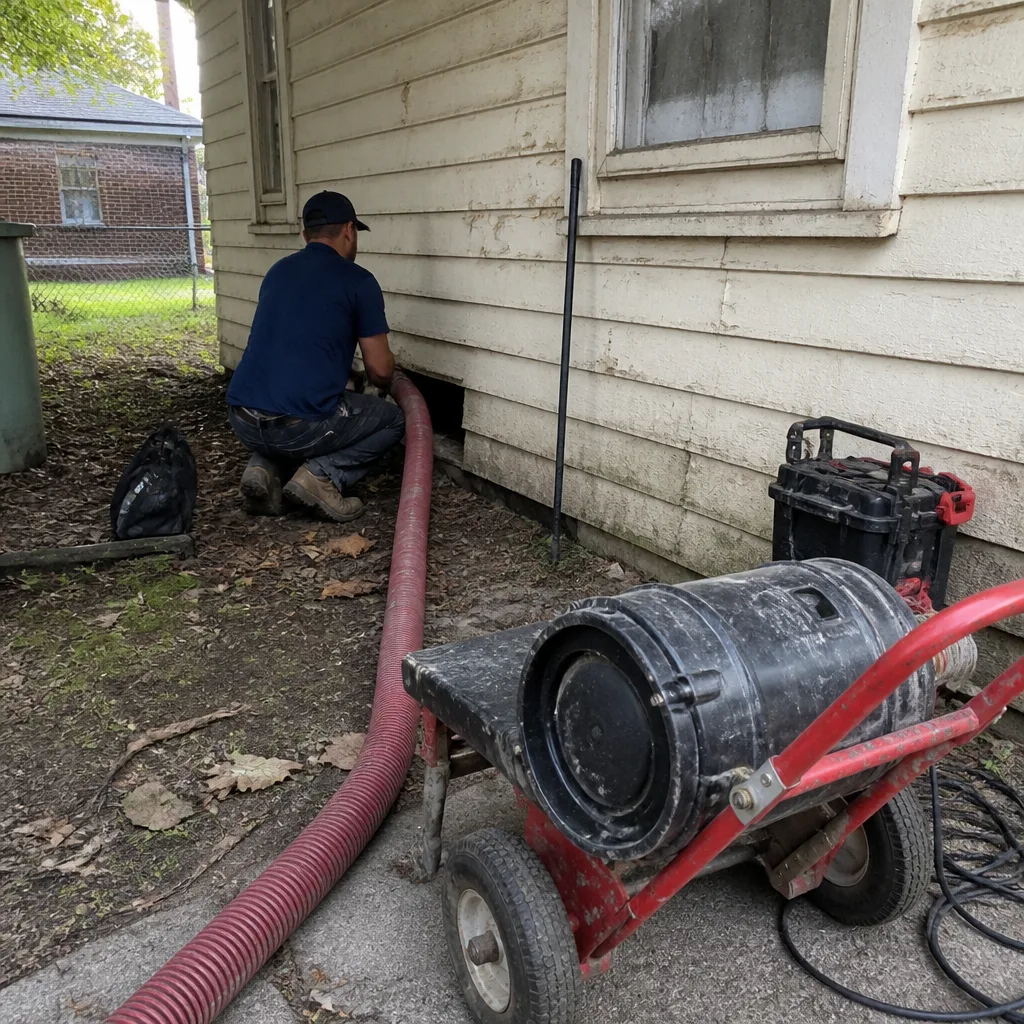 Before
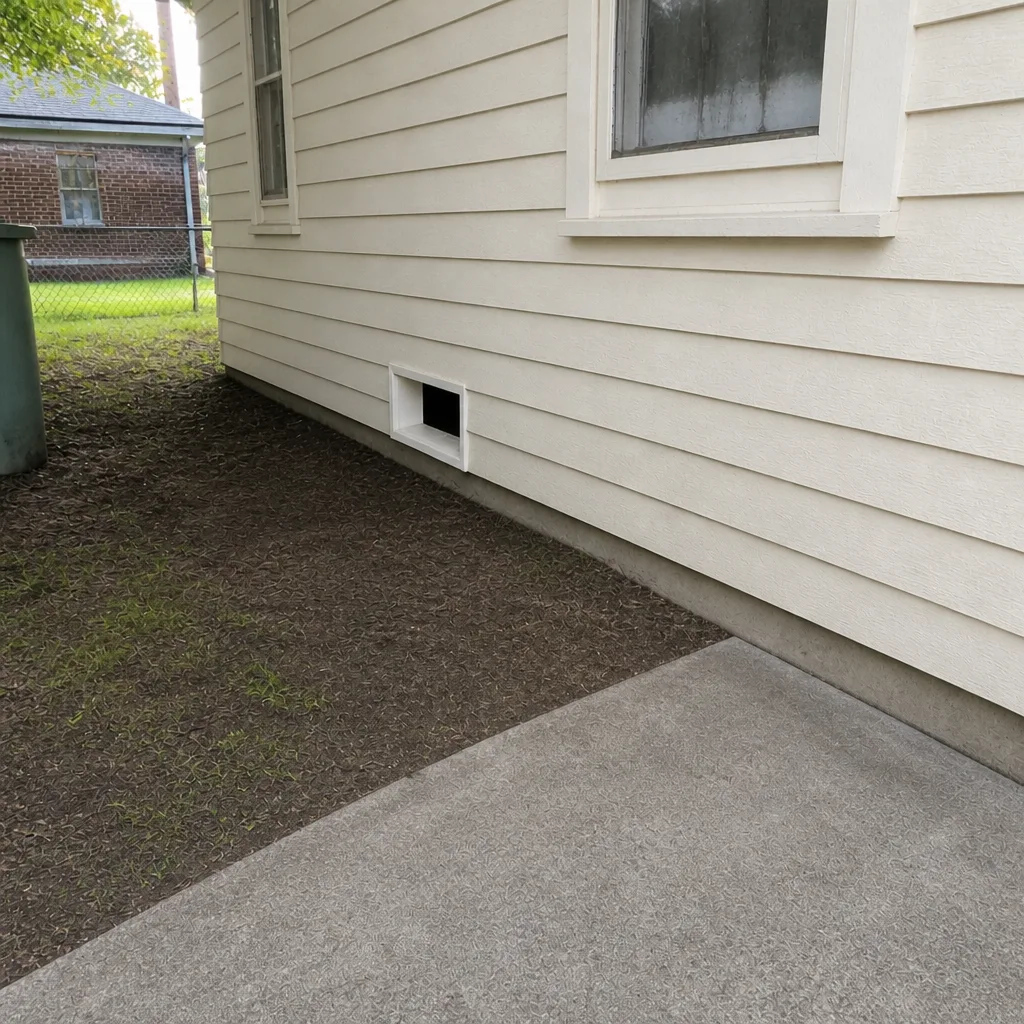 After
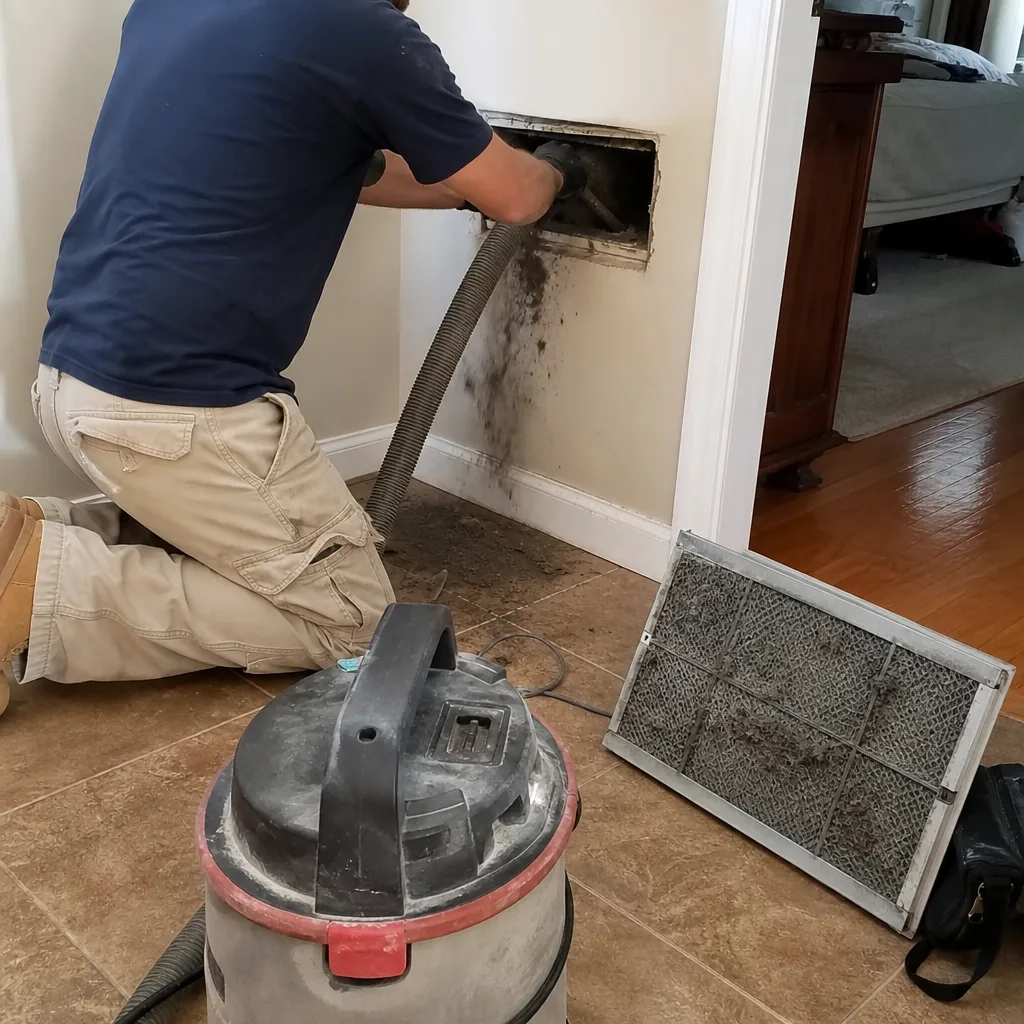 Before
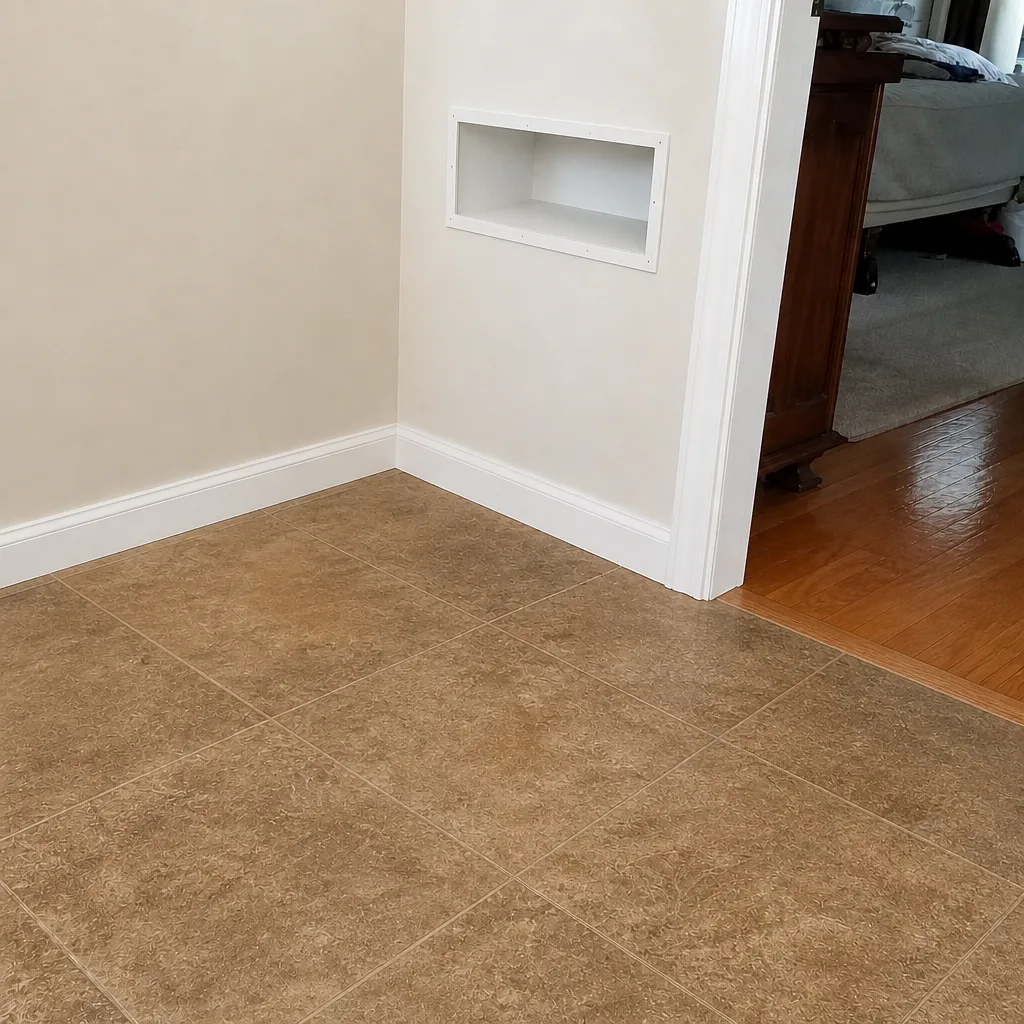 After
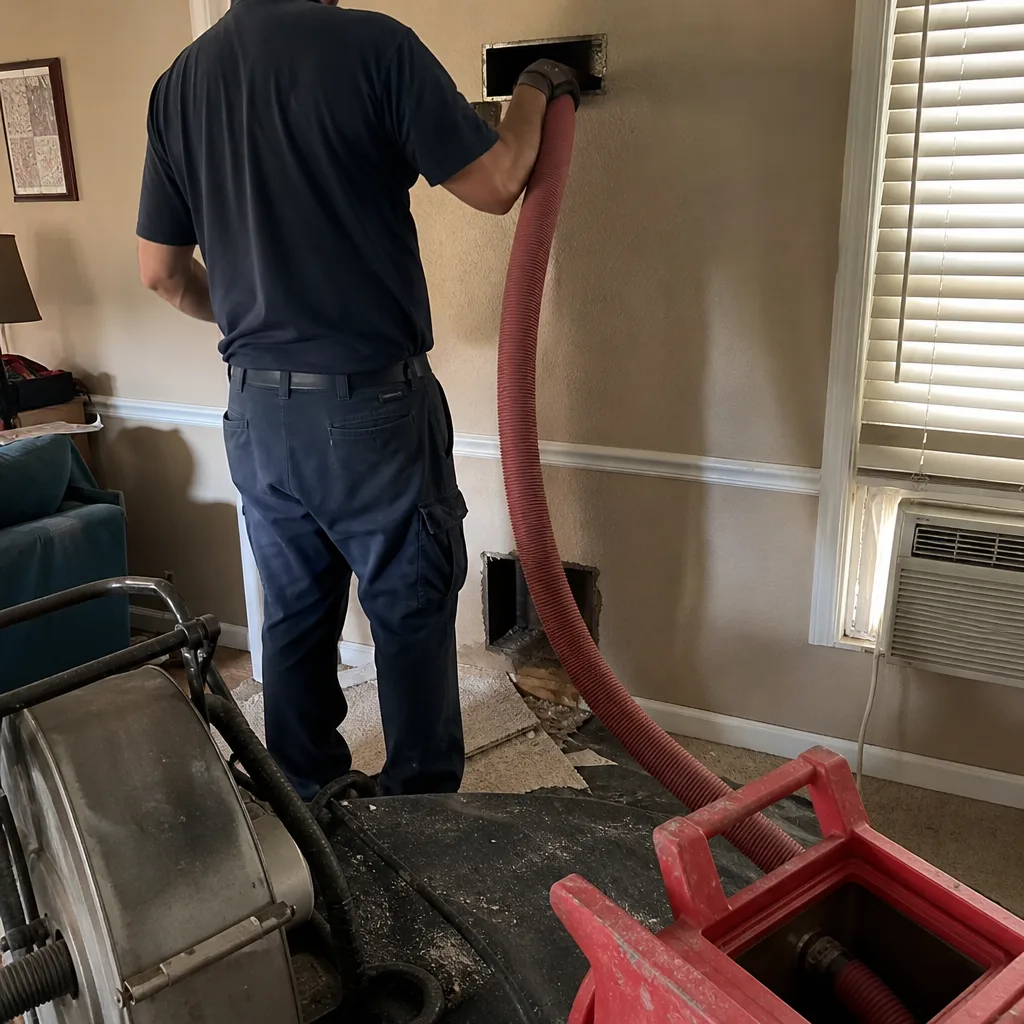 Before
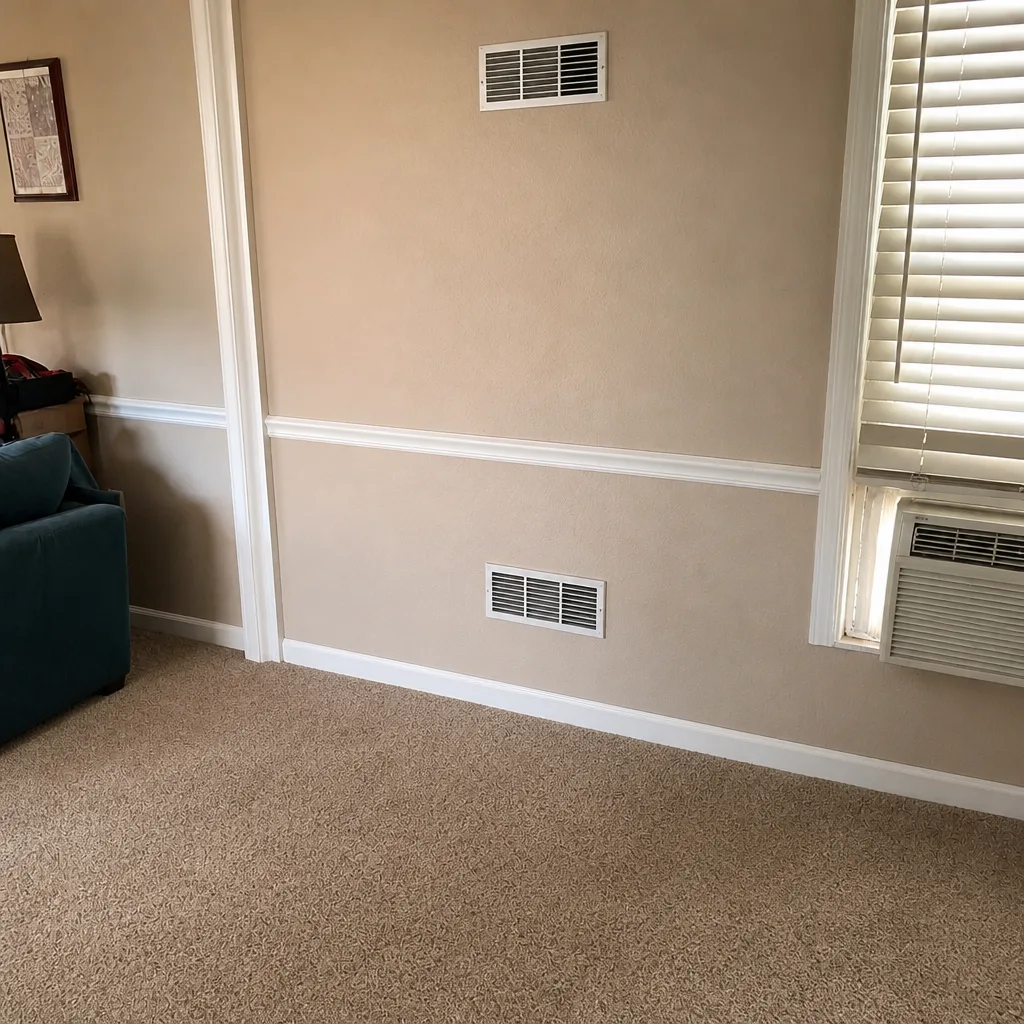 After
When to Call a Professional
Call a professional when the situation matches any of these:
- There has been a fire, and the HVAC system ran at all afterward.
- Water entered the crawlspace, the attic, or the mechanical closet.
- You smell musty or burnt odor from any supply register.
- A storm has pulled duct joints apart or dislodged a roof vent.
- You’re filing an insurance claim and need a documented assessment.
- You want a pre-event inspection and prepared system.
Hermitage Air Duct Cleaning offers free estimates in Hermitage – call (855) 726-7834. We answer 24/7, and fast dispatch is available from 7am to 7pm, Sunday through Friday.
Frequently Asked Questions
No. Smoke residue reaches the return system before the fire is out, and even a small fire leaves acidic soot on the blower and coil. Cleaning just the filter leaves that residue in place, and the first time the system runs, it redistributes. Shut the system off, document it, and get an assessment before running anything.
It depends on duct type and how much groundwater got in. Accessible metal duct that flooded but can be fully dried usually cleans up. Flex duct that took on groundwater, or any duct with visible mold growth on the interior lining, typically needs replacement. An inspection answers this in the first visit.
It usually will when the fire is a covered peril. Coverage is typically there for cleaning or replacement when the underlying cause is covered, but gradual issues and deferred maintenance are usually excluded. Documentation with dated photos, a contractor scope, and air samples strengthens the claim substantially.
Look at the returns and the filter for water or debris, check the attic for wet insulation or pulled duct joints if it’s safely reachable, and check whether any room stops cooling. Musty smell at a register means water got in; shut the system off and get an assessment.
Yes, if your system supports it. A pre-filter catches coarse debris before it loads the main filter and the coil, which extends filter life in normal use and provides real protection during a storm or renovation. Confirm airflow isn’t restricted before installing.
Yes. We can build the report the adjuster will need, including a written scope separating cleaning from replacement and, where requested, air sampling results with source-capture filtration. The important part is to call on the day of the event, before cleanup begins.
The Bottom Line
Emergencies in Hermitage homes are rare but not hypothetical, and the HVAC system is the part of the house that amplifies every one of them. The single most useful piece of knowledge here is this: shut the system off first, document before cleaning, and clean in the order of the contamination source. Slab and crawlspace homes take different paths after a flood. Storms work through the returns. Insurers need dated photos and a written scope. Two small modifications – sealed return grilles and a MERV-11 pre-filter – meaningfully reduce how much contamination your system takes on next time. When in doubt, get a free estimate before you touch anything.
Hermitage Air Duct Cleaning for full-system cleaning, repair, and indoor air quality service. Our technicians have up to 14 years of experience, and we work from the HVAC unit through every vent. To schedule air duct cleaning, dryer vent cleaning, HVAC cleaning, or a post-emergency assessment, call (855) 726-7834 for a free estimate. We answer 24/7. Fast dispatch from 7am to 7pm, Sunday through Friday.
Written by the team at Hermitage Air Duct Cleaning.